



















THIRD PARTY SUPPORT
Independent
Fourth Shift Support for Manufacturing & Legacy ERP Environments
Flexible, independent support for Fourth Shift environments that need steady hands and real experience. We help resolve recurring issues, support day-to-day operations, and keep heavily customized systems running reliably. Backed by seasoned engineers, we focus on stability, performance, and practical support without upgrade pressure.
THE AQIL DIFFERENCE
We provide you with reliable Fourth Shift support that keeps your operations steady
Most Fourth Shift environments have years of customizations and workarounds behind them—which is why issues don’t get resolved cleanly.
We take the time to understand how your system actually works, document it as we go, and stabilize the environment so it runs the way your business expects it to.
You have come to the right place if:
- Your Fourth Shift jobs fail or don’t complete consistently
- You’re dealing with recurring issues that never fully get resolved
- Your system has been heavily customized and is difficult to support
- You don’t have the internal expertise to troubleshoot complex issues
- You need responsive support from people who can actually resolve issues—not wait on someone else
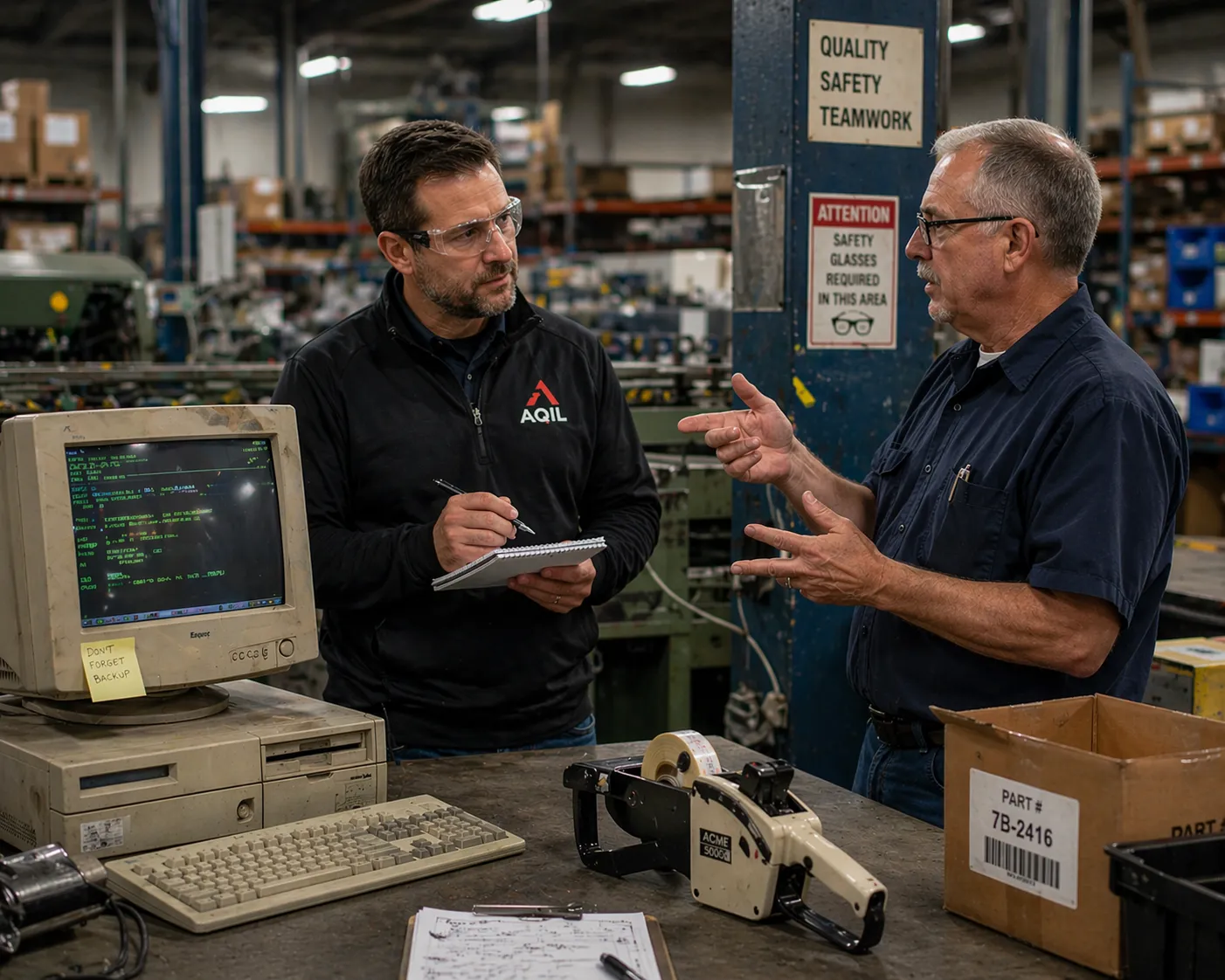
- You’re still running legacy components (even something like a Windows 98 box for EDI or printing) and it has to keep working
- Your team is stuck reacting to problems instead of getting ahead of them
- Your operations depend on the system being stable every single day
GET RESULTS
We don’t guess—we figure out how it actually works
Most Fourth Shift environments have years of customizations and workarounds behind them—which is why issues don’t get resolved cleanly.
We take the time to understand how your system actually works, document it as we go, and stabilize the environment so it runs the way your business expects it to.
CUSTOMER STORY
By fixing what kept breaking at random, AQIL gave a Fourth Shift team their time back
A small manufacturer running Fourth Shift had gotten used to the same frustrating pattern—every so often, something wouldn’t process correctly overnight. Jobs would show as complete but data was off, reports didn’t tie out, and someone had to dig through logs just to piece together what happened.
The issues were inconsistent—hard to reproduce, easy to miss, and never fully resolved.
The system had also become dependent on one person who “just knew how it worked,” which made every issue harder to troubleshoot and even harder to fix for good.
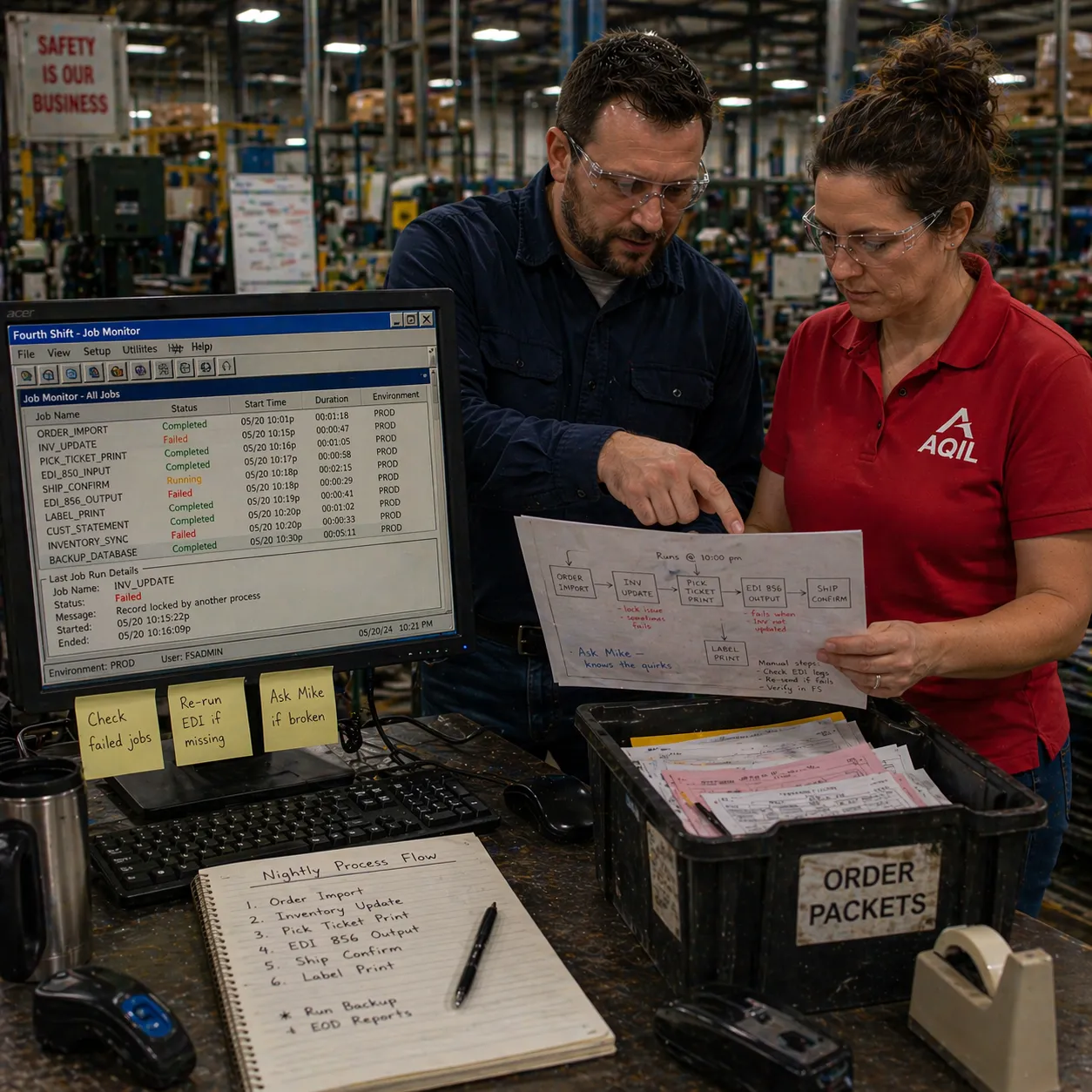
AQIL got into the environment, worked directly with the team, and mapped out how the system was actually operating—documenting the customizations and uncovering where things were quietly failing. Once those failure points were addressed, the random issues stopped showing up.
The system didn’t just work better—it became predictable again.
AQIL SERVICES
Helping you every step of the way
No matter where you are in your journey, AQIL can make it easier and less costly. Reach out to us, no pressure just talk.
FAQ's
Why are my Fourth Shift jobs not completing or failing randomly?
Fourth Shift jobs usually fail randomly because they depend on other processes that don’t always complete the same way every time. Timing issues, job dependencies, and older customizations can all create failures that are hard to reproduce.
In some cases, jobs may even show as completed while underlying data didn’t process correctly.
Getting to the root of it usually means looking at job sequences, logs, and how everything ties together—not just rerunning the job and hoping it works next time.
In some cases, jobs may even show as completed while underlying data didn’t process correctly.
Getting to the root of it usually means looking at job sequences, logs, and how everything ties together—not just rerunning the job and hoping it works next time.
Why doesn’t our Fourth Shift data match reports or inventory?
When data doesn’t line up in Fourth Shift, it’s often tied to jobs that didn’t fully process, integrations that didn’t complete, or custom logic that’s no longer behaving as expected.
These issues don’t always show up clearly—they tend to surface later as mismatched reports, missing transactions, or incorrect inventory.
Fixing it usually requires tracing how data moves through the system, not just correcting the output.
These issues don’t always show up clearly—they tend to surface later as mismatched reports, missing transactions, or incorrect inventory.
Fixing it usually requires tracing how data moves through the system, not just correcting the output.
Why is our Fourth Shift system so slow or getting worse over time?
Performance issues in Fourth Shift environments are often caused by years of changes—customizations, integrations, and growing data volumes.
Over time, things that once worked fine start creating bottlenecks, delays, and inconsistent behavior.
The challenge is that these issues build gradually, so they’re harder to isolate without looking at the system as a whole.
Over time, things that once worked fine start creating bottlenecks, delays, and inconsistent behavior.
The challenge is that these issues build gradually, so they’re harder to isolate without looking at the system as a whole.
Do I need to upgrade Fourth Shift to fix these problems?
Not always.
Many issues come from how the system has been customized and maintained over time—not from the platform itself.
Before upgrading, it’s usually worth stabilizing the current environment and identifying what’s actually causing the problems. In many cases, that alone can significantly improve reliability.
Many issues come from how the system has been customized and maintained over time—not from the platform itself.
Before upgrading, it’s usually worth stabilizing the current environment and identifying what’s actually causing the problems. In many cases, that alone can significantly improve reliability.